


Supporting Fine Motor Development for your Student
Fine motor skills involve the coordination of small muscles in the hands and fingers, often working together with the eyes. These skills are essential for everyday tasks such as writing, cutting, buttoning clothing, and using classroom tools.
The teachers in our local school district have identified fine motor skills as a priority need for students entering pre-k-2nd grade, and it is a skill that translates to later academic ease and success. Additionally, the fantastic thing about fine motor skills is that they can be strengthened through many activities that feel like play, and when we keep our tone playful during these activities it helps kids relax and build skills they may be struggling with and may otherwise resist.
Why Fine Motor Skills Are Important
Fine motor development is closely connected to a student’s academic success and independence. Students with strong fine motor skills are better able to:
Write legibly and complete written assignments efficiently
Use scissors, glue, and other classroom tools
Manipulate small objects in math and science activities
Perform self-care tasks like tying shoes or opening containers
When students struggle with fine motor skills, they may become frustrated, avoid tasks, or fall behind academically—not because they lack understanding, but because the physical act of completing the work is challenging. By supporting fine motor development, tutors help build both competence and confidence.
How Tutors Can Support Fine Motor Skill Development
Create a Supportive Environment
Encourage effort over perfection. Praise students for trying, and normalize mistakes as part of learning. Keep activities fun and low-stress.
Incorporate Practice into Everyday Tasks
Fine motor development doesn’t have to be separate from academic work. Encourage students to write, draw, cut, and manipulate objects during tutoring sessions.
Use Proper Positioning and Tools
Make sure students are seated comfortably with feet on the floor and materials at an appropriate height. Provide tools like thicker pencils, pencil grips, or child-safe scissors if needed.
Break Tasks into Smaller Steps
For students who struggle, simplify activities. For example, instead of asking a student to cut out a complex shape, start with straight lines or simple curves.
Model and Demonstrate
Show students how to hold tools or complete tasks. Sometimes simply seeing the correct technique can make a big difference.
Be Patient and Observant
Watch how a student approaches tasks. Do they grip too tightly? Avoid using one hand? These observations can help guide your support.
Sample Activities to Build Fine Motor Skills
These activities are easy to implement and can be adapted for different ages and skill levels:
1. Coloring and Drawing
Encourage students to color within lines or create their own drawings
Use crayons, markers, or colored pencils
Tip: Smaller crayons can help strengthen finger grip
2. Cutting Practice
Provide paper with straight, zigzag, or curved lines for students to cut along
Progress to cutting out shapes or pictures
3. Playdough
Have students roll, pinch, and shape dough into letters, numbers, or objects
This strengthens hand muscles and improves coordination
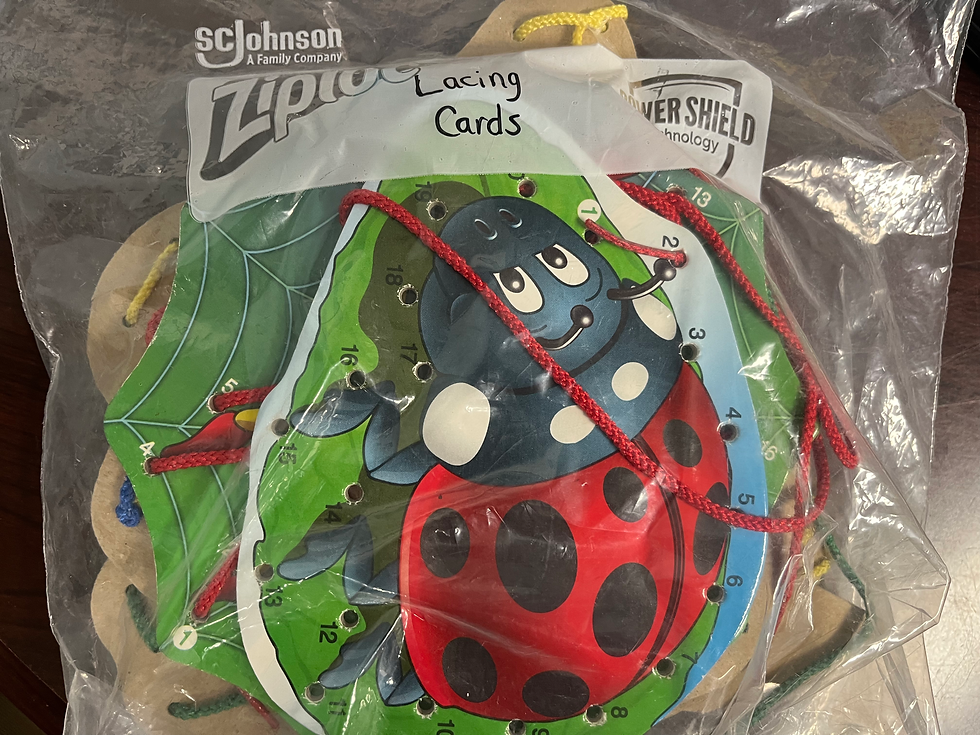
4. Beading and Stringing
Use beads and string (or pasta and yarn)
Students can create patterns or simple jewelry
This activity builds precision and hand-eye coordination
5. Puzzle and Building Tasks
Jigsaw puzzles, LEGO blocks, or stacking games
Encourage students to manipulate small pieces carefully
6. Writing and Tracing
Practice tracing letters, numbers, or shapes
Gradually move toward independent writing
Use fun prompts like writing a short note or drawing and labeling a picture
7. Everyday Skill Practice
Opening containers or snack packages
Zipping backpacks
Practice tying their shoes.
Resources in the Project Purpose Office
We have two bins in the Project Purpose office dedicated to Fine Motor Skills. Below are some pictures of items you will find in these bins. (Items may change each school year.)




Comments